
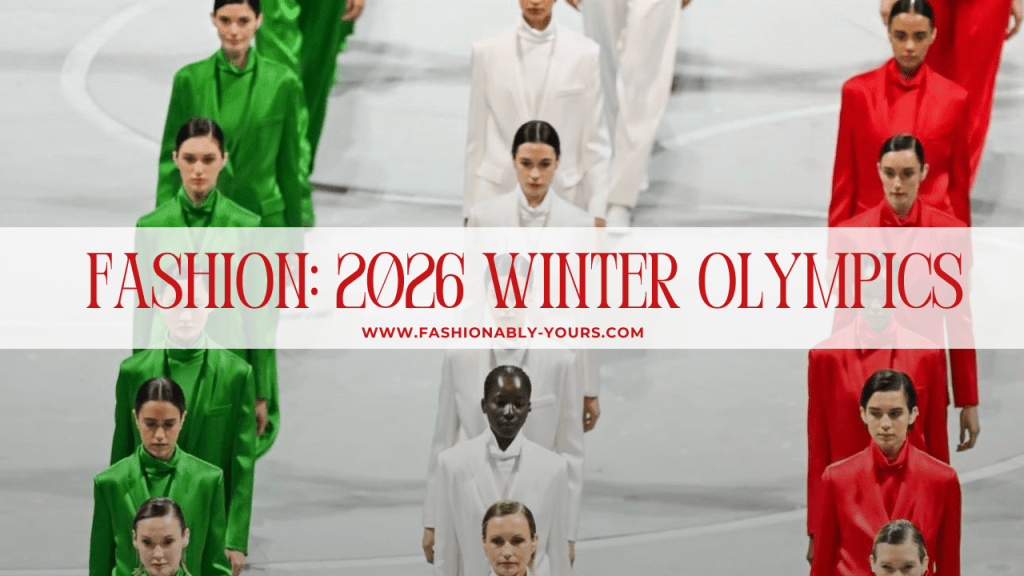
What happens when the Winter Olympics are held in one of the greatest fashion capitals? Let’s talk about it.
This month, Milan has transformed into a cultural hub with visitors from all over the world coming to celebrate the Milano Cortina 2026 Winter Olympics. Living here has given me a chance to witness firsthand the convergence of sport, fashion, and culture. What I’ve noticed is how the Olympics give nations a chance to tell their stories through fashion.
During the February 6th Olympics Opening Ceremony, the uniforms each athlete wore told the stories of their nation. The uniforms were about identity and communicating their culture.
In this week’s blog post, I want to share a few standout uniforms from the Milan Cortina Opening Ceremony. I will offer some insight into what I believe each look represents.
Italy- Giorgio Armani Tribute
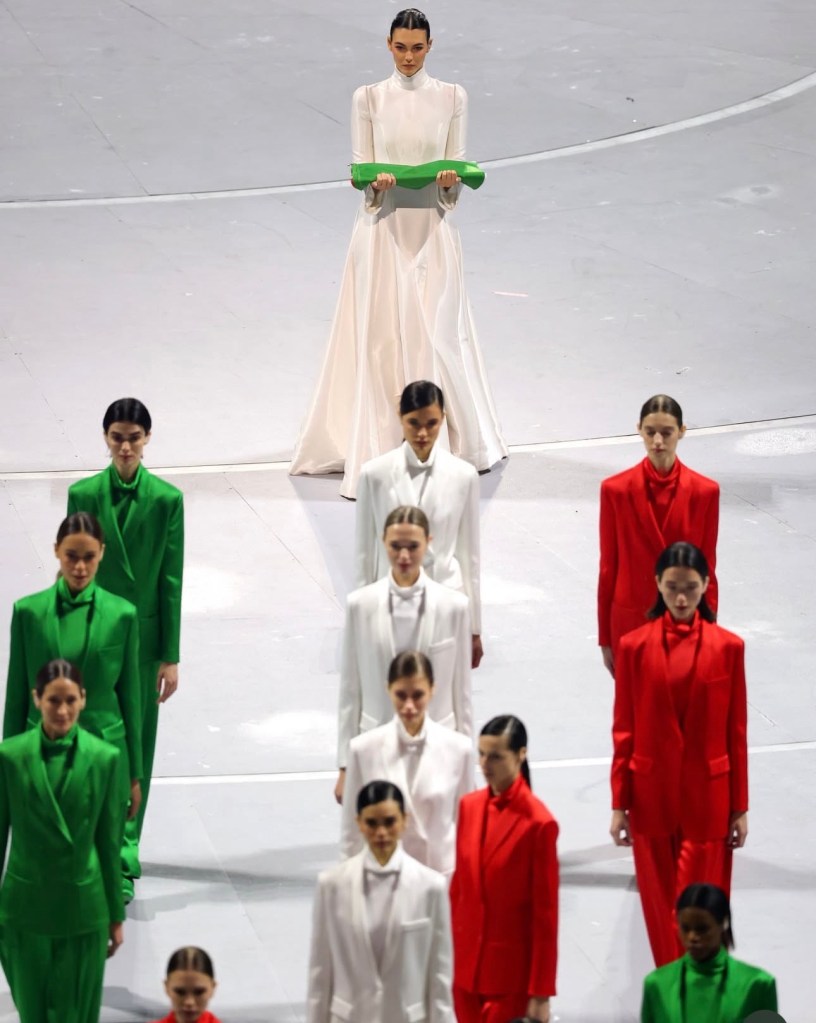
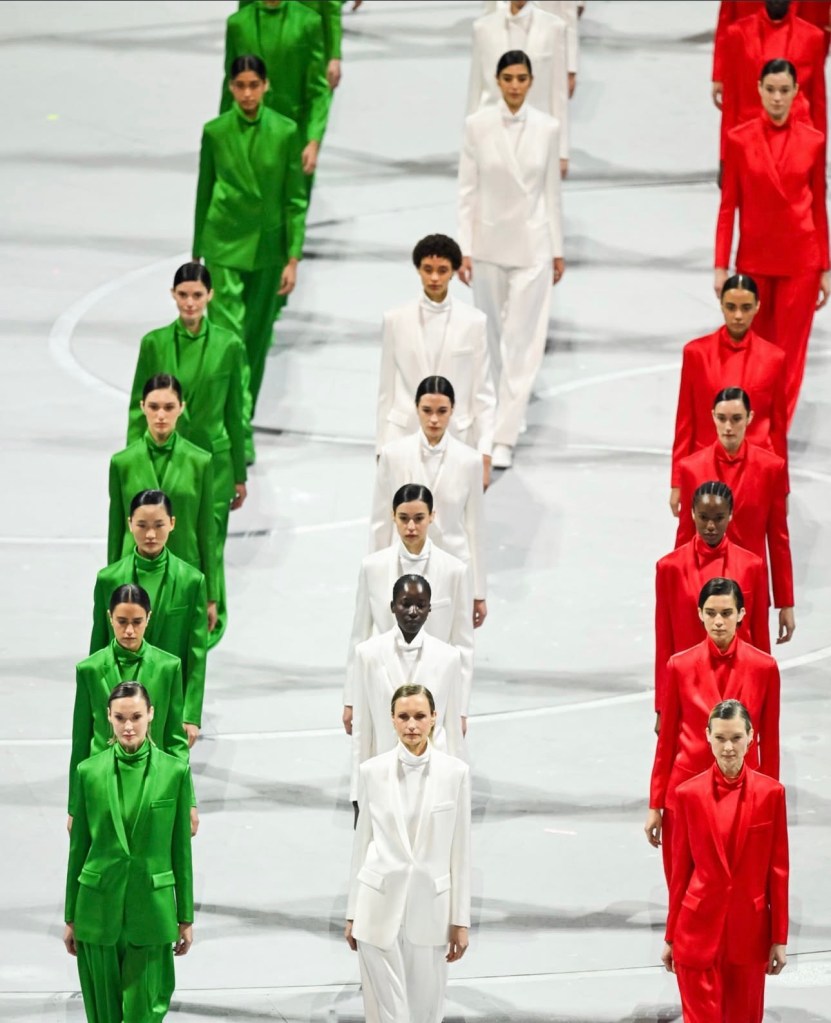
What does Italy’s uniform represent?: Heritage & Excellence
Italy has been the powerhouse of luxury fashion, artisans craftsmanship, fine textiles, and understated elegance. For decades, “Made in Italy” has meant precision and excellence.
This year, that reputation felt even more meaningful with the tribute to Giorgio Armani during the Opening Ceremony.
Armani has always been one of my favorite designers. Like many, I was deeply saddened by his passing in 2025. Since 2012, he has been the creative force behind Team Italy’s Olympic uniforms, shaping the country’s athletic image with his signature tailoring.
For the Milan Cortina 2026 Winter Olympics, the Italian team marched out in Armani’s color-blocked pantsuits in the three shades of the Italian flag (green, white, and red).
The look was extremely powerful because it was a tribute to an Italian legend while also being a reminder that Italy’s strength continues to lie in heritage and excellence.
USA- Ralph Lauren & Skims
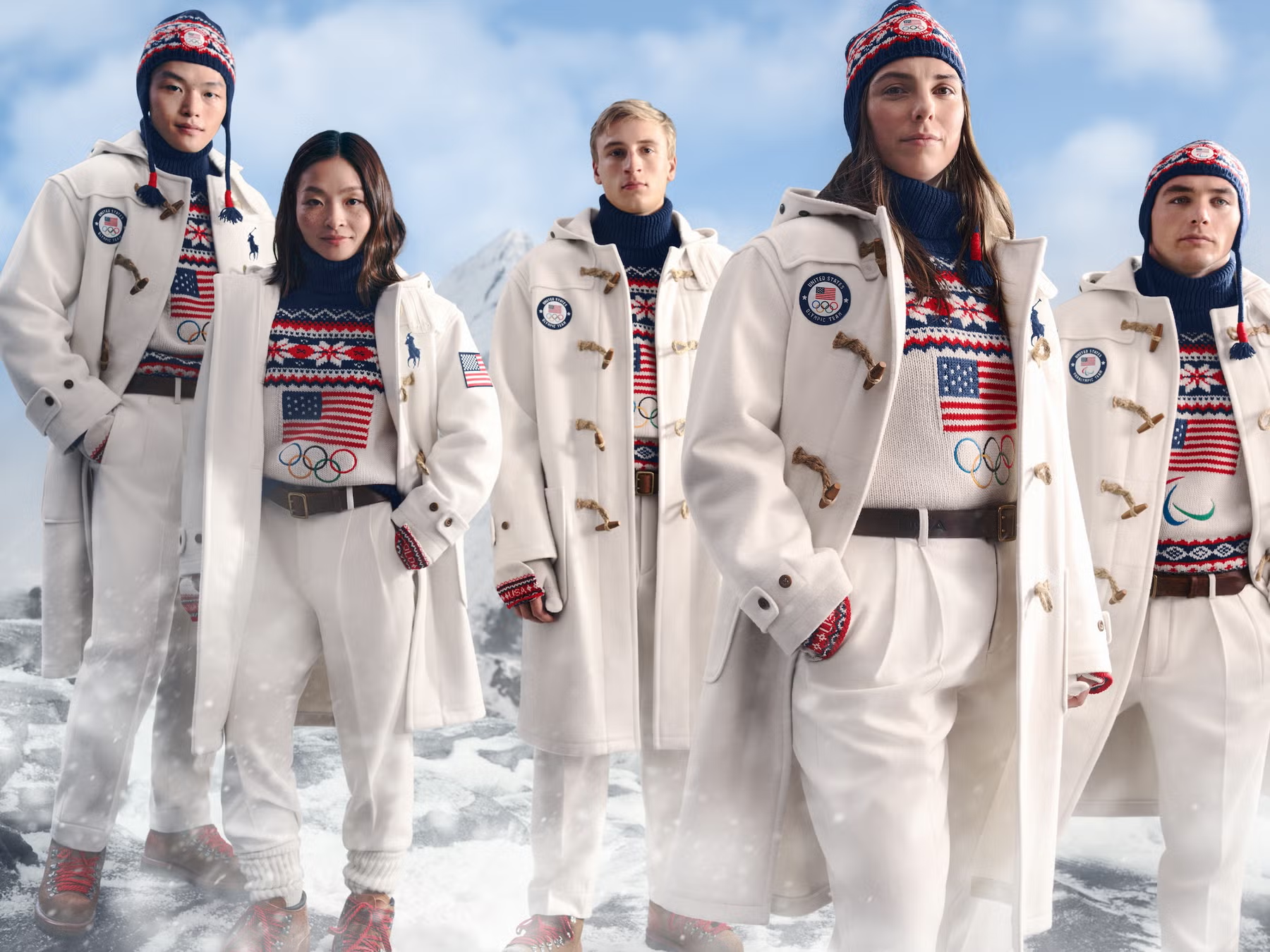
Photo courtesy of Ralph Lauren
What does USA’s uniform represent?: Passion & Hype
When it comes to sports in general, the United States has strong sports fans that create a certain “hype culture.” At the Milan Cortina Opening Ceremony, the uniforms represented this passion.
Ralph Lauren delivered exactly what he does best: timeless American style with a modern edge. Structured navy coats, refined layering, and classic silhouettes .The outfits had a bit of an East Coast preppy vibe to them.
Beyond the ceremony look, athletes were given an entire wardrobe: vintage-inspired sweaters, loungewear, hoodies, and of course the iconic Polo Bear dressed in Team USA gear. Naturally, TikTok created “hype” around this, The unboxings, the “get ready with me” content, the Olympic Village hauls, all added to the brand’s visibility.

Kim Kardashian’s brand Skims also created custom apparel for Team USA athletes. Across social media, athletes showcased their Skims pieces.
These two brands understood that the Olympics are not just a global sporting events, they are also global branding platforms. This brand visibility communicated the story of passion and hype that exists around Team USA and their country’s sports culture.
Haiti – Stella Jean
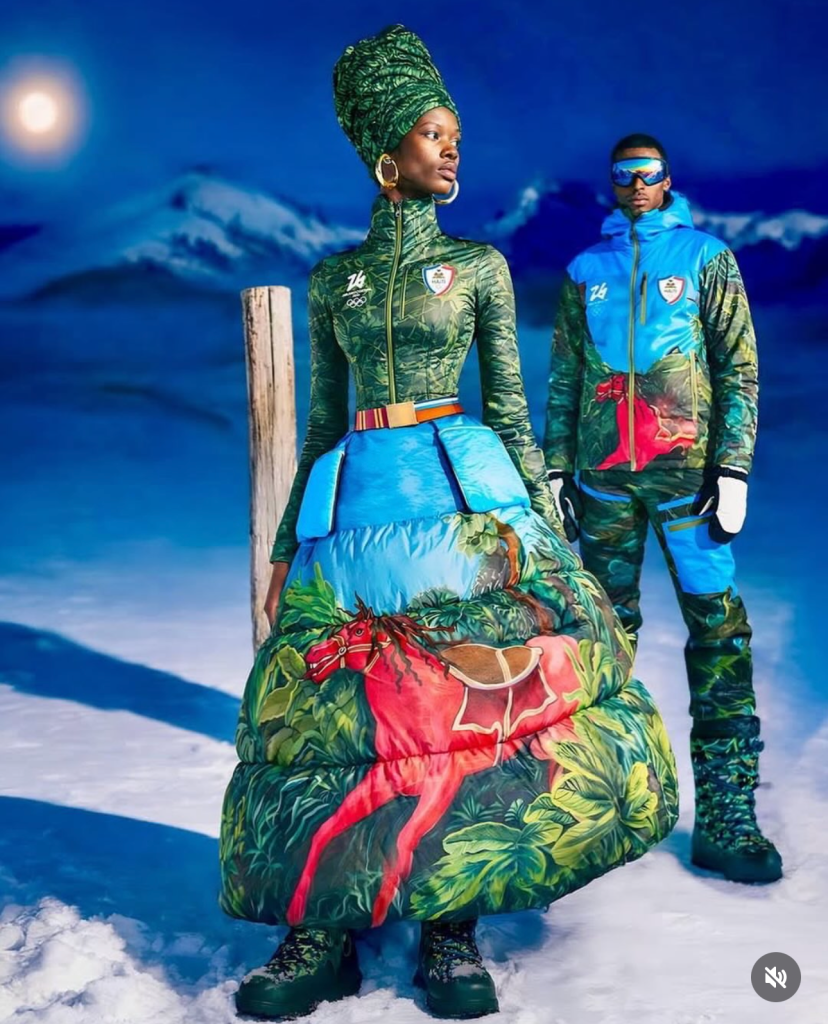
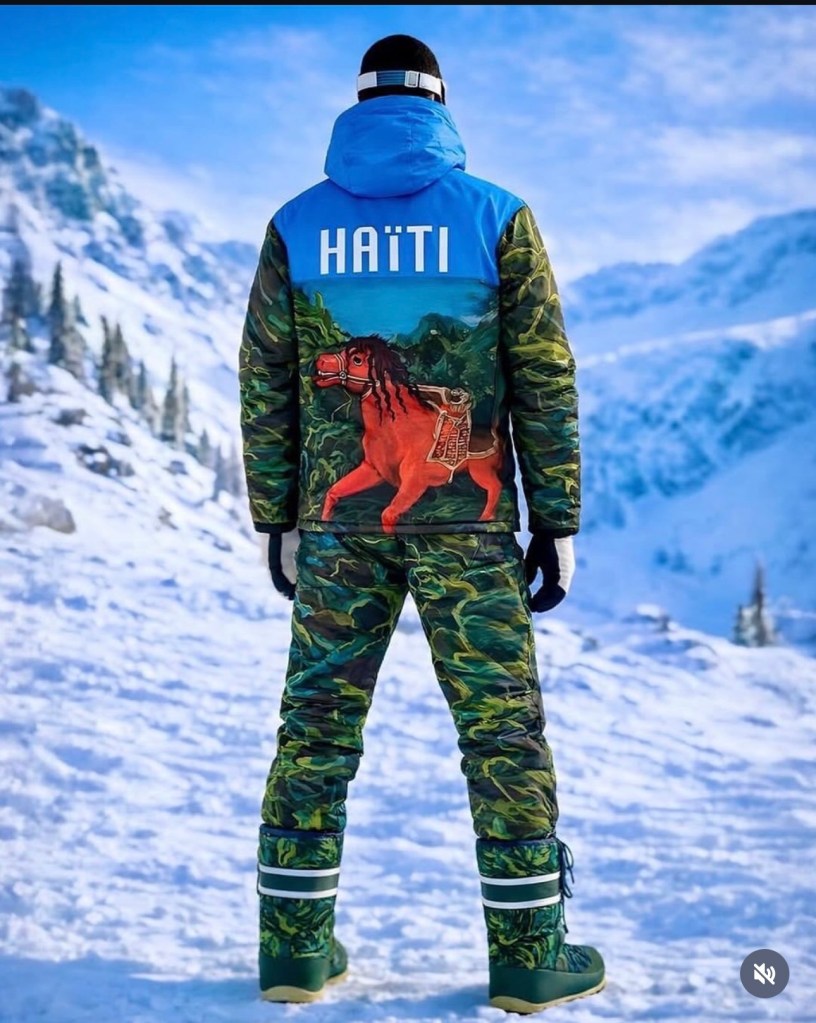
What does Haiti’s uniform represent?: Resistance
If you want to talk about art in motion, let’s talk about Haiti’s Opening Ceremony uniforms designed by Stella Jean.
These uniforms were hand-painted! According to Milano Cortina, “the hand-painted uniforms feature a prominent red, riderless horse against a tropical, sky-blue background, inspired by the art of Haitian-born painter and sculptor Édouard Duval-Carrié.”
Stella Jean chose to recreate this painting on the uniforms because she believed this painting symbolizes Haiti’s spirit and represents wisdom, patience, and peace. Ultimately, this uniform had to go undergo a lot of different changes after the IOC ruled against her using the whole painting on the uniform, due to what they deemed political propaganda. You can read the full story here on this amazing piece of art and all of the thought that went behind it.
Despites the challenges Jean faced with the IOC’s decision, she worked diligently to find a solution and this is where the “story of resistance” comes into play. The uniforms were repainted and delivered two nights before the opening ceremony.
The vibrant textiles and the symbolism in the uniforms represent so much more than just a outfit- this is a uniform that conveys resistance and diligence for the nation of Haiti.
Mongolia- Goyol Cashmere
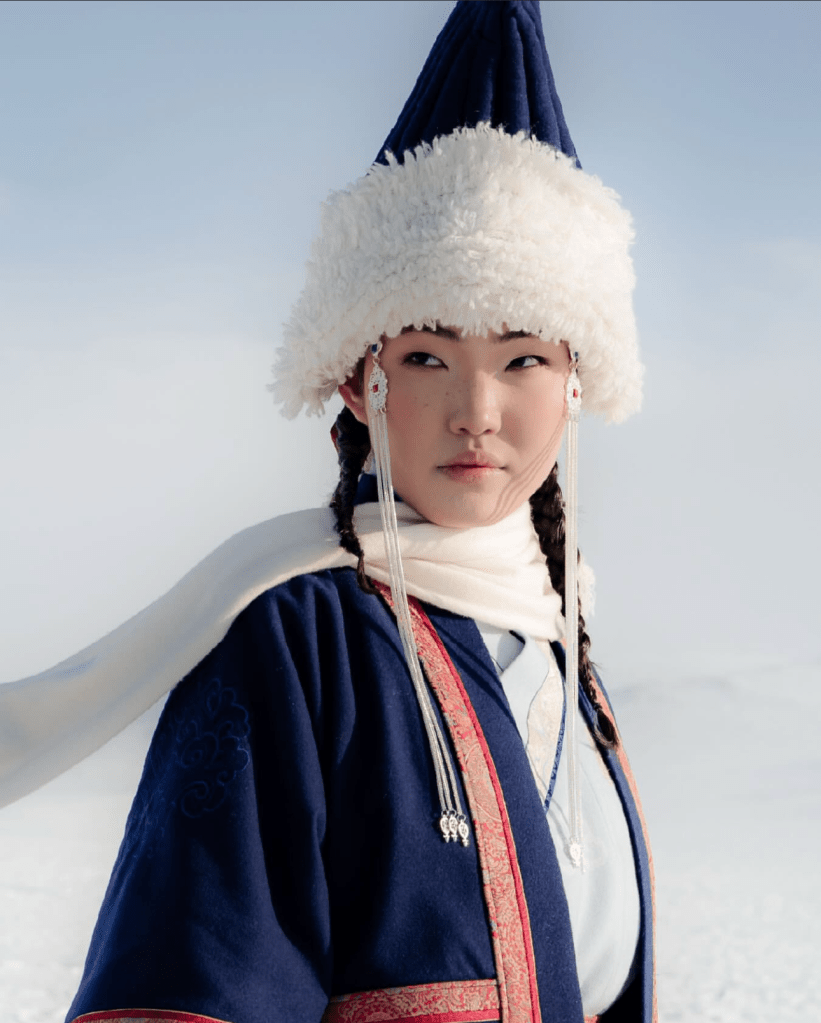
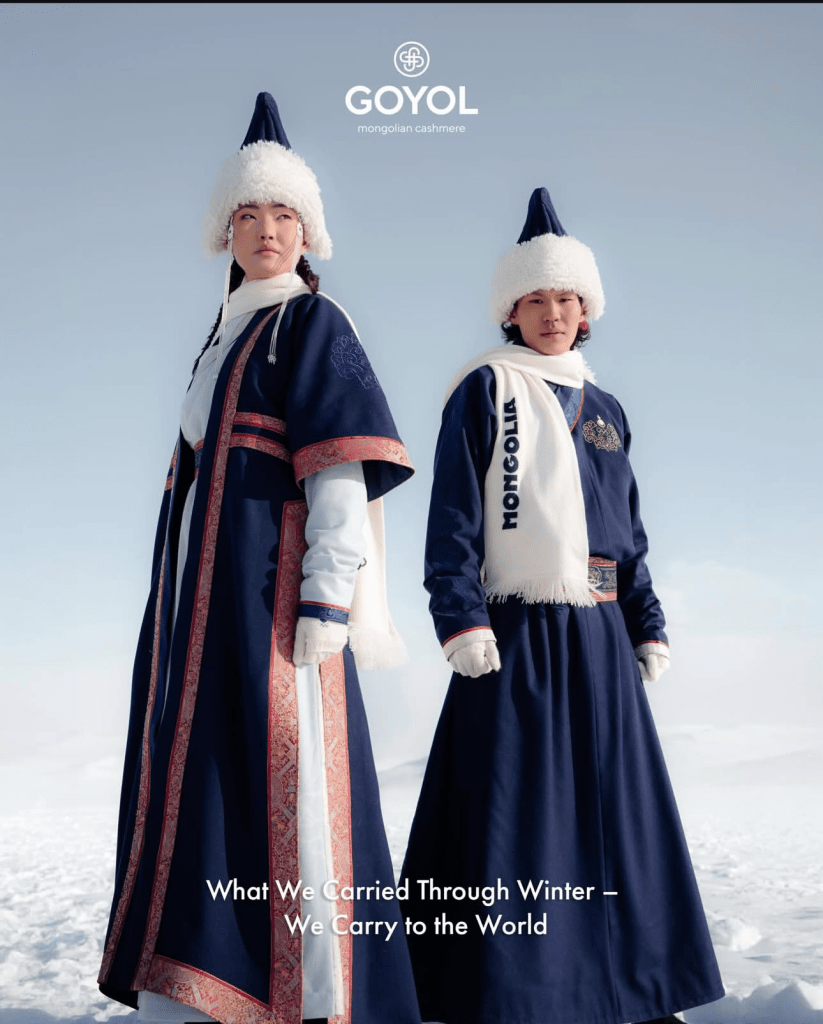
What does Mongolia’s uniform represent?: Tradition
Mongolia’s Milano Cortina 2026, designed by Goyol Cashmere represented tradition and authenticity. The country took inspiration from their ancient Mongolian clothing culture and represented these elements on a global scale.
This uniform took inspiration from the Great Mongol Empire of the 13th and 15th centuries. The uniforms featured a functional skirt that allowed for enhanced movements, and a raised collar that protected against the cold, along with an overlapping front that also protected against the cold. Mongolian cashmere was in this uniform as a symbol of their heritage as it was used by nomadic Mongolian people in the past and now to endure harsh winters.
What stood out most was the confidence in tradition. Mongolia stayed true to its heritage and created beautiful visual imagery that represented this.
I love that Mongolia reminded us that innovation in fashion does not require abandoning roots.
Japan- Asics
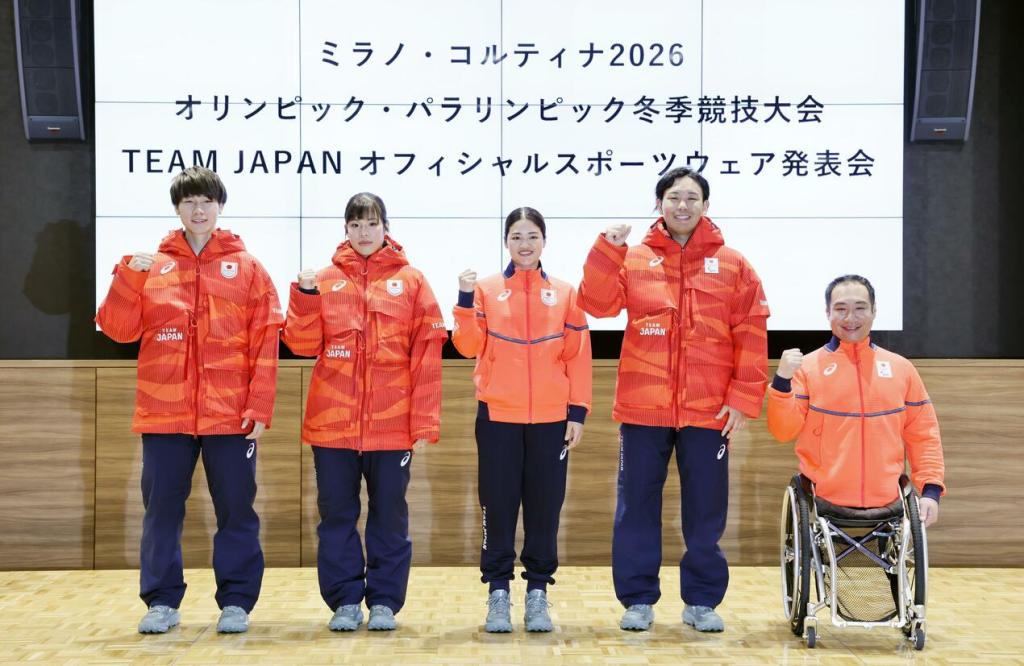
What does Japan’s uniform represent?: Innovation
One aspect of Japan that I love is their ability to mix tradition with innovation and technological evolution. That’s exactly what they did in their 2026 Milano Cortina Opening Ceremony uniforms.
This year, Team Japan came out wearing uniforms designed by Asics, showing jackets made with a blend of two colors: “Team Japan Red” and “Sunrise Red”, paying homage to what the color red symbolizes in Japan (good luck, happiness, joy). The jacket also has a kansui (traditional flowing water pattern) woven into the fabric representing the strength and fluid movement of the athletes.
I love the cultural significance and symbolism in these uniforms, but I also love the innovation factor that most of the uniforms were made using recycle materials, and a process that significantly reduced greenhouse gas emissions. This added detail represents the innovation that Japan dedicates to their designs. In such a global setting, this message of sustainability and circularity is increasingly important, so shout out to Japan for making it part of their outfits.
Final Thoughts
Overall, the Milano Cortina Winter Olympics show how fashion continues to be a communicator of culture. I am excited to see what the looks at the Olympics Closing Ceremony will look like on February 22, 2026.
Comment down below what your favorite uniform look from the Olympics Opening Ceremony was! My favorites were Italy and Haiti. Stay tuned this week for another blog post coming about trends from New York Fashion Week.

Join the Community!
Subscribe below to receive the latest articles, trends, and inspiration directly in your inbox!
 Fashionably Yours
Leave a comment